Deutscher Rheumatologiekongress 2026
BCMAxCD3 bispecific antibody therapy with teclistamab induces B- and plasma cell depletion and preliminary clinical efficacy in treatment of refractory systemic sclerosis – a case series
Text
Introduction: Systemic sclerosis (SSc) is a severe autoimmune disease in which disease-specific autoantibodies implicate plasma cells as central drivers of pathogenesis. First clinical observations suggest that BCMA×CD3 bispecific antibody therapy with teclistamab can achieve effective plasma cell depletion, yet systematic data from larger cohorts are lacking.
Methods: Patients with severe and progressive SSc unresponsive to at least two immunosuppressive therapies were treated with teclistamab using a step-up regimen (0.06 mg/kg day 1, 0.3 mg/kg day 3, 1.5 mg/kg days 5, 14, 21, 28) and received anti-microbial prophylaxis with acyclovir and cotrimoxazol. All immunosuppressive and antifibrotic therapies were discontinued ≥2 weeks before initiation. Clinical efficacy and safety were monitored throughout the observation period.
Results: Seven patients were recruited and received teclistamab (patients characteristics Table 1 [Tab. 1]), which was generally well tolerated; no immune effector cell-associated neurotoxicity syndrome (ICANS) or high-grade cytokine release syndrome (CRS) occurred. One patient died from presumed pulmonary-renal syndrome following normotensive SSc renal disease on day 20. All patients developed infections with upper respiratory tract infections and tonsillitis being the most common complications. All patients developed severe hypogammaglobulinemia.
Table 1: Baseline characteristics of patients with refractory SSc before teclistamab treatment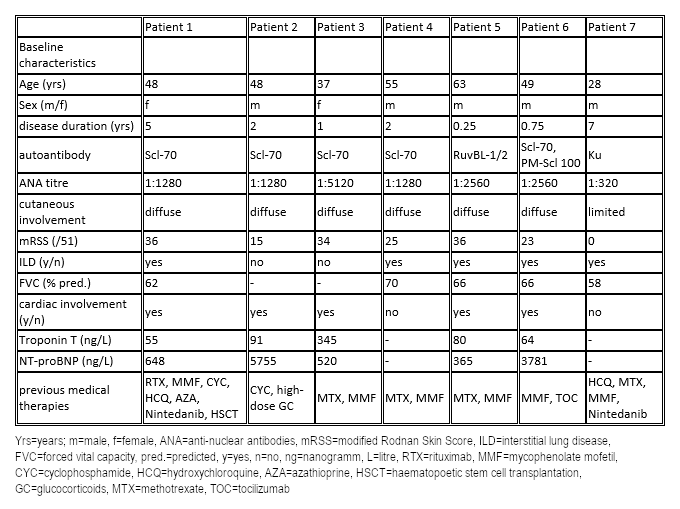
Flow cytometry of peripheral blood and bone marrow indicated a complete eradication of CD38+CD138+ plasma cells and CD20+ B cells by week 2 and 8, respectively. There was a concomitant fall in autoantibody titers in all patients.
Clinically, early and marked improvement in skin fibrosis was observed in three out of seven patients within 6 weeks (patient 1 from 36/51 to 29/51; patient 3 from 25/51 to 6/51) while three remained stable over the first six weeks but showed improvement thereafter. In all patients with interstitial lung disease pulmonary function tests and signs of alveolitis on HRCT improved. All patients suffering from SSc heart disease, which completed an appropriate follow-up of at least 3 months (3/7), showed an improvement of cardiac biomarkers.
Conclusion: This case series substantiates previous single-patient observations by demonstrating that teclistamab induces effective plasma and B cell depletion with early clinical signals in severe and refractory SSc. These findings underscore the need for clinical trials to assess long-term efficacy and durability of teclistamab therapy in SSc.
Disclosures: No conflicts of interest.