
Deutscher Kongress für Orthopädie und Unfallchirurgie 2026 (DKOU 2026)
Beyond the call button: Patterns and circumstances of inpatient falls after hip and knee arthroplasty in 11 rehabilitation clinics
Text
Objectives and questions: Inpatient falls are a feared complication in rehabilitation settings, particularly after total hip arthroplasty (THA) and total knee arthroplasty (TKA). There have been only few studies to date on the circumstances under which falls occur in rehabilitation clinics. This retrospective study analyzes the circumstances of falls after THA/TKA across 11 rehabilitation facilities, with a focus on call-system usage and inpatient environmental factors.
Material and methods: In this retrospective multicenter study we conducted a descriptive analysis of 1 795 falls using fall reports from 11 rehabilitation clinics between 2016 and 2026. After each fall, the attending nurse entered the fall parameters into the hospital information system in a standardized format across all locations. Extracted variables comprised standardized parameters and were treated as categorical (e.g. time, fall location, assistive devices, nurse call usage). Data was cleaned and harmonized. Time stamps were aggregated into year, day of week, and hour of day. Results are reported as absolute frequencies (n) and percentages (%).
Results: Across the participating clinics, 1.795 falls were documented in the study period. Falls occurred most frequently in the patient room (n = 750; 43.9%), followed by the bathroom (n = 250, 15.9%). Bed-related falls were rare: only 3 (0.2%). Most cases occurred in the morning hours before breakfast. At the time of the fall, 57.9% (n = 883) of patients were mobilizing with crutches and 21.5% (n = 328) with a rollator; only 0.3% (n = 4) were mobilizing without any assistive device. In 71% of falls, patients had not used the nurse call system. Regarding environmental conditions, 69.6% of falls occurred when the room was reported as bright/daylight, and in 20.3% artificial lighting was documented as switched on. Most patients wore sturdy shoes (41.6%) or open shoes (22.4%) (see Figure 1 [Fig. 1]). In 53.2% of cases, there were no further injuries, followed by “other injuries” (22.5%), abrasions (8.4%), and bruises (6.2%). Only 1.4% of cases involved dislocation.
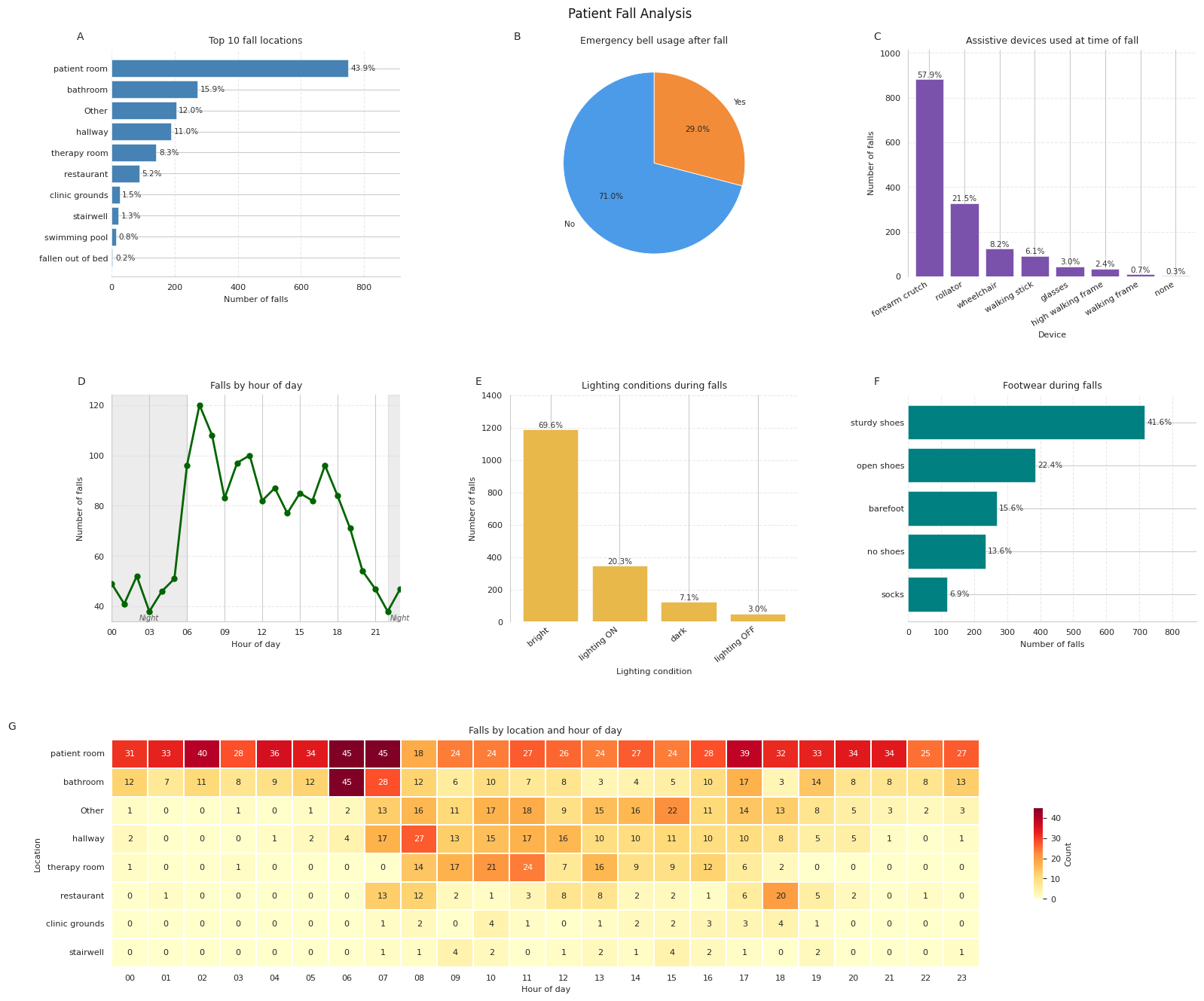
Discussion and conclusions: In this multicenter rehabilitation cohort following THA/TKA, most falls occurred in the patient room and bathroom, while falls from bed were uncommon. Surprisingly, most falls occurred in relatively clear conditions, such as bright surroundings, with solid footwear, and not at night, but in the early morning before breakfast. A clear majority of patients did not use the nurse call system before mobilization, which suggests a potentially modifiable interface between behavior and system rather than a purely environmental problem. Fall-prevention strategies after arthroplasty should prioritize (1) improving accessibility and usability of call systems (e.g. wearables), (2) targeted patient education and “call-before-you-move” routines, and (3) workflow and environmental measures focused on high-risk locations (room/bathroom), even in apparently adequate lighting conditions.



